Monday, May 27, 2013

Monthly Preview of Brand New Books


Put your sensors on high alert because some great new non-fiction books continue to roll off the presses! A couple of those had their phasers on stun: Mitchell Zuckoff's Frozen in Time and Marie Arana's Bolivar: American Liberator. That is not to slight Michael Pollan's Cooked: A Natural History of Transformation or  Glennon Doyle Melton's Carry On, Warrior: Thoughts on Life Unarmed in the least. I thoroughly enjoyed each reading experience and took away something valuable from each.

This week's blog selection defines eclectic. Adventure. History. Food. Life. The stars consist of plane crash victims, a South American patriot,  elements of the earth and a mommy blogger. The scope of travel expands from Greenland's frozen tundra to Bolivia's scorching sun to the East and West Coasts of the USA. The books effected me differently. Melton's Carry On, Warrior left me enthused and energetic upon initially finishing it, but the enthusiasm faded while I can't get Arana's Bolivar out of my mind. The more I think about what I read about Bolivar, the more respect I have for him. Pollan's Cooked taught me how to prepare meats so that they taste better.  Zuckoff should hire me to market his books - I've loved all two of his books I've read and recommend them frequently online and in person.


This could've been me.
______________________________________________________________

 What I liked about Cooked: A Natural History of Transformation by Michael Pollan 

First off, while the title left me wondering if it would be a boring slog, it describes the book perfectly-  like a title should.  And...no the book isn't boring although the sections that cover aspects of cooking that I haven't experienced failed to hold my attention as closely. Pollan divides the book as follows:

 Part 1: Fire  - Celeb BBQ chef, Ed Mitchell, rises from the ashes here and allows Pollan to assist him. This section is more than Mitchell though, the reader takes a journey through the world of barbecue: preparation, what makes it sizzle, what defines barbecue in different parts of the USA, shortcuts, essentially the whole hog on barbecue.

Part 2: Water - Pollan saturates himself in learning all he can about how to properly braise meat in water. Who knew that deliciously prepared meat requires so few ingredients? He suggests prepping  the meat days before eating by shaking plenty of salt on it and letting it sit. It seems that the salt gets busy and breaks down the muscles in the meat and allows for greater absorption of herbal flavors and such. I tried a mini-version of this, an afternoon salt/herb-marination of hamburger for tacos, no kidding, that was the best hamburger I ever tasted! (This coming from someone who eats little meat.)

Part 3: Air - Hubby makes the bread in our family. Oh, by the way, if you are wondering why I suddenly mentioned bread when speaking about air its because yeast requires air to rise, hence the association with air in this section of the book. Anyhow, back to hubby and bread and air. Pollan apprenticed himself out to several bakers in the quest of making the perfect loaves of bread. He learned much, and I passed on what he learned to hubby. The only problem is, I found, since we bake gluten-free bread, and Pollan didn't, not much applies. Not to mention, hubby needs little help with his bread, its all been good!

Part 4: Earth - Okay, honestly, I found little in this section with which I could relate since it delves into  fermentation and food-processing that involves bacteria. While some of the characters and anecdotes entertained, I found myself doing more skimming than reading. Pollan made sauerkraut, pickles, kimchi and cheeses (with a nun). He also brewed. What did grab my interest was his narrative about a gathering he attended that included many health-conscious folks who advocated fermentation for the purpose of increasing the good bacteria we all have in our guts. They discussed problems many people have with conditions such as "leaky gut" and immune problems. At first, Pollan thought these folks were quacks but as he began researching their claims, he found most of their claims legitimate. I appreciated his open-mindedness - something that can be respected in an already popular author.

Why this book won't be for everyone:
Unless the reader has an interest in cooking, I can't imagine this book entertaining.


My 4.0 star Goodreads review



What I liked about Carry On, Warrior: Thoughts on Life Unarmed by Glennon Doyle Melton
A candid account of Melton's encounter with drug and alcohol abuse,bulimia, marriage and childrearing crises all from her humorous, positive frame of mind. Its a nice mix of serious and funny, wise and down-to-earth. Actually, its always down-to-earth as the author's goal is to live her life "unarmed" - no phoniness, pretending to be something she isn't. Its hard to be open and honest and still "fit in".

Sample: (Author discussing small town life.)
"It's the small town attention to detail. It's harder to pretend that people or moments are dispensable here. You have to be careful in a small town. If someone has a barking dog, or is driving too slow , you should not give the dog dirty looks or cut the slow person off. Because then you will forever be The Lady Who Gives Dogs Dirty Looks and Cuts People Off. There is no anonymity here. People are responsible for their actions. And if you don't like your neighbor, well you best find something you like, because nobody's going anywhere. There're just not enough folks to keep trying people out until you find one who matches you perfectly. I'm learning to practice what I preach to the kids: you get what you get, and you don't throw a fit."


Why this book won't be for everyone:
1) Although Melton is not "preachy" about her faith, it is an important part of her life, some readers will be turned off by her many references to God and Jesus. She is not a church-y Christian as she has no use for denominational rules, standards but much respect for living what one believes is true. Many people of faith may be offended by her use of colorful language. Personally, it endeared her to me because it showed me that she was serious about being herself and not conforming to standards.
2) Melton comes from a blogging background. She has a highly successful blog, Momastery.com. In reviews, one of the criticisms offered by readers was they felt the book had too much of a blog flavor to it. I suppose I'd have to concur mildly, however, how little blog-iness it had compared to other blogger/writers impressed me! (Think: Pioneer Woman and you will see what I mean.)

My 4.5 star Goodreads review.


What I liked about Frozen in Time by Mitchell Zuckoff

Okay, okay, I know this book made my Derring-do Dozen in last week's blog, but I LOVE it! What's not to love? Its history thawed out. WWII, a dash of Greenland culture, bomber crews from all over the US learning to survive together on the ice. Innovation, courage, strength of mind, spirit and body, loyalty, caring for the ill all show up in this slice of history. Who would you prefer to rescue you? The Navy, Coast Guard or Army? I know who I would choose after reading this book.

Another question. How do you get the government to pay for your recovery expedition? Find out here.

Why this book won't be for everyone:
Still thinking, I'll get back with you. *grin*

4.5 stars


What I liked about Bolivar: American Liberator by Marie Arana

Was there ever a man who did so much for his continent who was so unappreciated? How could this be? Simon Bolivar grew up wealthy, spoiled but submitting to the cruel Spanish rule. His parents died while he was young. His guardian uncle thieved from his inheritance and tossed him off to be raised by his tutor. Bolivar behaved terribly. Insert a passion for a cause: freedom from the Spanish and discover a new Simon Bolivar, a man committed to freedom for all.

Six thoughts about Simon:
1) This was a man who lived and breathed bringing freedom to South America. This in spite of betrayal, assassination attempts, rugged, frozen mountains to travail over, fever and personal sickness - nothing stopped him.
2) He was unprejudiced in an horribly prejudiced world. He fought for all, Indian, mulatto, English, etc.
3) He desired no payment for his services as Liberator. He refused enormous sums of money for freeing countries from Spanish rule. He gave away money liberally to his soldiers and fellow sufferers.
4) He didn't desire to rule. Yes, he did rule about every country he conquered at some point, but he repeatedly saddled someone else with the job as soon as possible.
5) He astounded me with his insight into power, money and freedom. For being a once silver-spooned young man, he impressed me with his wisdom garnered through living like the common man.
6) Bolivar lobbied for a canal to be built through Panama. Was it his idea? I don't know. But it shows his progressiveness.

Why this book won't be for everyone:

The first reason would have to be the length. Even though the actual biography is only 400+ pages, there is a healthy-sized section of notes and such. Even though it is easier to read than most biographies, it isn't something to be zipped through, it requires concentration.


4.25 stars


New Stuff Links:
Books released in April, 2013
Books released in May, 2013
Books to be released in June, 2013
Books to be released in July, 2013
Books to be released in August, 2013
New York Times Bestseller list

Next week brings more of 2013's books reviewed. In the meantime, stop by and check out New Updates to the Around the World List Page

Until next week, happy reading to you!


Monday, May 20, 2013

An Adventure Dozen...

 photo adventure-word.jpg

A DOZEN TALES OF DERRING-DO

It all began with Endurance: Shackleton's Incredible Journey. That audiobook started me on a journey of seeking books chronicling the courage of men and women the world around. Although some of the best stories took place in the extremities of the world such as both Poles, mountain tops and deep caves, books like Letters of a Woman Homesteader or Alaska Nellie captured my attention and didn't let go.  These were pioneering women who not only battled the elements, wildlife, but men's bruised egos jealous of their accomplishments. So from the frozen Greenland tundra to the Land Down Under, from the desert to the ocean, from a South American mountain peak and the skies over Africa to a cannibal-inhabited valley, here are a dozen of my favorite adventure memoirs. NOTE: These are not listed in any special order.


 photo adventuresunset.jpg
Wheeeee!


This book started it all. Once I read Endurance: Shackleton's Incredible Voyage , true life adventure memoirs had me hooked! Reading about Shackleton and his crew's bravery inspired me.


 photo c2fe0715-98e2-4656-b261-b9851c9423d0.jpg
Mountain climbing disaster books get repetitious after a while. Similar stories, different mountains....but I loved this one for Joe Simpson's humility and courage while another bonus is the quality of writing. Most thrill seekers don't write as well as Simpson does in Touching the Void.


 photo 7d34f8cf-650a-49d3-9c1e-1dfab1bcdf3b.jpg
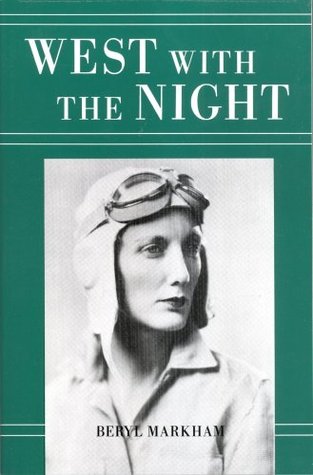
Take one motherless daughter, a frequently absent father, surround her with the wilds and beauty of Kenya, teach her how to survive indigenously and voila! you discovered Beryl Markham. There's nothing this lady couldn't do! Rescue pilot, adventure, a true female adrenaline junkie. West with the Night is a fun read.


 photo bd68e624-4e10-4f7f-b568-c7ab92410e97.jpg
One of my all-time favorite books. This is a turn-of-the-20th-century account of retired sea captain Joshua Slocum's Sailing Alone Around the World. Slocum meets South American headhunters, Mrs. Robert Louis Stevenson at her island habitat, weathers perilous storms....A delightful read!


 photo five.jpg
Lost in Shangri-la   What to do when a plane crashes in a mountain-encased valley in an area of New Guinea where evidence of cannibals abounds? Its WWII and the base camp is busy fighting a war in the Pacific when a pleasure trip to Shangri-la turns positively hellish.


 photo c78cc4f8-f8dc-4290-83c4-3f6d804963fb.jpg
Frozen in Time by Mitchell Zuckoff 
Greenland. What a misnomer for the part of this ice-covered country where WWII planes get disoriented in snowstorms crashing into glaciers and frozen tundra. However, its makes terrific reading material with its Arctic heroes, daredevils, dog sled teams and its never-before (and probably never-since) rescue attempts.


 photo 01c4b009-876c-485c-8881-41ffd7b10ce3.jpg
In a Sunburned Country    No one writes a humorous travel memoir like Bill Bryson. I read this years ago and still remember parts of it like I read it yesterday. It also is to blame for my desire to visit Australia.


 photo 4d2c0c75-3899-4a28-a14c-b748b68307a3.jpg
Kon-tiki     Okay, so Thor Heyerdahl's migration theories have been conclusively disproven...Who cares! I loved this book for its crazy derring-do. You have to be nuts to cross a healthy stretch of ocean on a log raft, right?


 photo 0907e9f3-1a1d-4d31-bc87-e83d73893012.jpg
Skeletons on the Zahara offers shipwreck, capture by desert nomads, survival and sometimes not. One of those books that stay with you a long, long time and impress you with the power of man's will to live.


 photo f4057809-8e46-47fe-acdf-30a0e4d58387.jpg
Alaska Nellie       My all-time favorite memoir. Spunky Nellie Neal pursues adventure in Alaska. Tougher than most of the men on the road crew that stops at her roadhouse to eat. More courageous than most of the men living in wilderness isolation when faced with a charging bear. No one is quite like Nellie!


 photo b9396bcf-09bb-44f4-a60b-5bd59508d2f2.jpg
Letters of a Woman Homesteader   How many women could homestead in the newly-opened Western territory and survive, let alone thrive? I loved reading every one of these letters. Another spunky lady driven to conquer the land and who finds love in the process.


 photo b0331d24-4cae-45af-80d7-b9299c08d497.jpg
A Schoolteacher in Old Alaska      Hannah Breece is a spinster schoolteacher who doesn't allow her marital status to label her. Instead she seeks adventure while doing what she loves, educating children and adults eager to learn. Inspirational.


LISTS
THE DERRING-DO DOZEN
(in no special order)


1.  National Geographic's Top 100 Adventure Books
2.    Amazon's Top True Adventure Books
3.    Outside Magazine's Top 25 Books for the Well-read Explorer 
4.    Library Thing's Top 100 Adventure Books 
5.    Goodreads Trailblazing Women Adventurers List
6.    Good Non-fiction Books for Teens (Downer's Grove Library) 
7.    Kirkus Best Non-fiction Books for Children  
8.    The Essential Adventure Library for Men 
9.    More Magazine's Ten Outdoor Adventure Books Not to Miss 
10.  WSJ's Recommended Outdoor Adventure Books 
11.  National Outdoor Book Awards 2012 Winners List 
12.  Telegraph's Nature Books to Nurture a Sense of Adventure (kids) 


* The May Edition of New Books Reviews

Monday, May 13, 2013

Traveling to (I)ndia!! via books - Part 1


INDIA!            INDIA!            INDIA!


Classes (varnas)General dutiesItems of interest
Brahmana (Brahmin) instructors of Hindu religiondedicated to Hindu religionJawaharlal Nehru, 1st PM of India
Kshatriyawarriors and rulersHow to wear a dhoti Kshatriya style
Vaishayafarmers, artisans and merchantsVaishaya matrimony site
Shudrasemi-skilled, unskilled laborShudra - the Rising movie preview
Harijan (untouchables)"polluted" laborers, outcastes"The Untouchable" You Tube documentary


When I selected India as my subject for "I" reading in my alphabet challenge, it was with the idea that I would explore the differences in the four castes, Brahmins, Kshatriya, Vaishaya and Shudra. This seemed reasonable until I started reading about them! I soon found out that there are no black and white rules for any caste, but variations amongst the different subcastes. In fact, I found the same holds true in regards to the caste system in general. Upon beginning this project, I picked up a book entitled Homo Heirarchus: The Caste System and Its Implications assuming I would read what scholars from the first part of the 20th century thought about India's caste system. Unfortunately, I was only able to wade through a limited amount of material because it was written in such a patronizing style with few appealing tidbits of information. However, Homo Heirarchicus did offer one useful insight: scholars couldn't agree on whether religion drove caste, caste drove religion or some other variation of either/both. This proved interesting as I went on to read a couple of fiction books centering on the Brahmin caste as well as a memoir from a Kshatriya-caste member and discovered that there are no absolutes within the castes either and there are multitudes of opinions swirling around about application of traditions and religious activities. More research proved that there is debate whether heredity was a factor in determining caste, or if it is solely based on occupation. One site even proclaimed that personality played a role in caste determination. Blogs fought about whether leaders and famous figures really belonged to certain castes. I soon came to the conclusion that nothing appears to be "caste" in stone. With this in mind, along with the multitude of subjects to discuss surrounding this topic, I made the decision to make this a recurring topic that I will come back to throughout this year of blogging. This particular blog will focus on some caste traditions
This instrument, a veena, makes appearances throughout the book, the Toss of a Lemon.
and a short discussion of the growth out of the caste system since India's birth as an independent nation based on the books I read in preparation for this blog.
Brahmin widow requisites:  white sari and shaved head


Tradition: Twice Born

Twice born refers to the sacrament of initiation undergone by members of the Brahmins, Kshatriya and Vaishayas regarded as a second or spiritual birth. Male caste members wear a sacred thread loop, next to the skin over the left shoulder and across the right hip.
(Merriam-Webster)

In the book, The Toss of a Lemon, this ceremony is called a "poonal" and signified that a boy was ready to begin learning. This is how it is described: On an auspicious day, at an auspicious hour, seven little boys gather shivering before dawn, oiled and clean, in new silk dhotis and shoulder cloths.....They are told, by the wise and kindly priest heading the morning's events, that this is the day of their birth. Anyone can be born from a mother, he tells them, but what sets us apart as Brahmins is this second birth into caste, into knowledge. Each boy huddles beneath a cloth with his parents, who reveal to him the prayer with which, each daybreak, he will petition the sun for illumination. He is given the three intertwined poonal threads that will signal to the world his special status: his right and obligation to knowledge, his right and obligation to poverty (except, not really).

 
Tradition: Banishment of women from society once they are widowed

The idea behind this tradition is stated thus in The Toss of a Lemon: A woman whose husband dies before her is, in some cosmic, karmic way, responsible for his death, and must be contained. The best way to do this is to make her unattractive: no vermillion dot to draw attention to the eyes, no turmeric to rub on the skin for brightness, no incense to suffuse the hair, no jasmine bunches to ornament it. No hair to suffuse, but that comes later......Sivakami accepts the two white cotton saris that will be her only garments and her badge. Here are some of the requirements of Brahmin widowhood that I gleaned from reading The Keeping Corner and The Toss of a Lemon:


               -Wears a white sari of lesser quality fabric
               -Shaves head and continues to have head shaved frequently
               -Shuns weddings and festivities
                - Does not appear in public
                - Does not touch others even small children barring her from affection


Mangoes!
***SPOILER ALERT FROM THIS POINT ON***
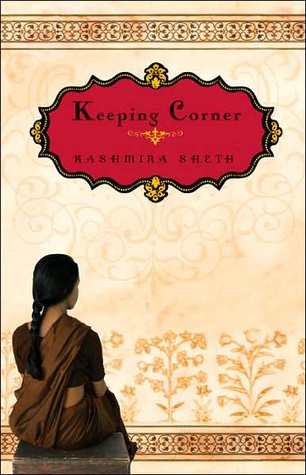
Keeping Corner describes the life of a young virgin espoused to a local boy who is tragically killed shortly before the time they are to become a couple. She is required to "keep corner" which entails remaining in a certain section of her parents home for the course of one year. Her beautiful glass bangles that were given to her by family members in celebration of her  "married" state must be broken and she is not allowed to wear jewelry again.

Through the course of both these books, progress is made by some of the main characters in regards to adherence to new values that improve their lives while others choose to cling to prejudices and destructive values and traditions. This is not to label all traditions as "destructive". Not in the least. It was clear that the origins of many Indian traditions did have value or at least did at the time they were constructed. However, in the case of the widow traditions it is difficult to find value. Fortunately, in Keeping Corner, young Leela is not willing to throw her life away to widowhood and embraces Gandhi's doctrines and progressiveness. But sadly, Sivakami of The Toss of a Lemon starts her life progressive because of the influence of her husband but changes little afterward except when pressed by her family. Sivakami finds that her son, Vairum, is disgusted with her lack of adaptation to the new culture growing in India creating a chasm between the two. Vairum represents the new Indian who is class-tolerant, eating with members of lower castes and eschewing castes while Sivakami clings to the traditions of the old India. Much like real life, members of her family fall at about all points in-between, some more willing to accept change, others less. The book offered an excellent look at the evolution of Indian culture.

Famous chef & author, Madhur Jaffrey

Tradition: Arranged marriage based on horoscope readings

I don't think there exists any literature in the world that uses the word "auspicious" as much as Indian literature. Every time I've seen the word its been used in conjunction with comparing horoscopes of potential brides and grooms for the purpose of an arranged marriage. From as early an age as 2 years old, parents would start looking for potential marriage partners for their children. (The actual marriage didn't take place until they were older.) If a child had a inauspicious horoscope he/she could be shunned or have difficulty in finding a marriage partner. In The Toss of a Lemon this happens when Hanumarathnam mentions to Sivakami's parents perhaps you have already heard: the weakest quadrant of my horoscope has a small shadow...It...it faintly suggests I will die in my ninth year of marriage. Hanumarathnam was a wealthy, respected healer/seer, normally a good catch. Later in


the book Sivakami's oldest son faces the prospect of marriage. He refuses to be bound by convention and chooses his own wife much to the chagrin of Sivakami. In Keeping Corner, Leela's marriage was arranged from a very early age. She approves of her bridegroom, but has friends who find the tradition stifling.

There is no mention of arranged marriage in the memoir by the Kshatriya caste member, Madhur Jaffrey, Climbing the Mango Trees. Probably, because the memoir is about her childhood and her father and uncles lived liberally compared to their fellow countrymen. Jaffrey's grandfather was proud of his heritage, but his sons while maintaining the communal living of the extended family embraced new ideas and
rubbed shoulders with Muslims and British alike. Jaffrey was exposed to the latest


Gandhi influences in Keeping Corner
drama, music, clothing and culture available. Even though she lived in India during a time that would have overlapped with both of the fiction books I read, hers was a different India much I'm sure in part because she didn't reside in rural areas (except during non-school months) and due to her father's liberalism. All the same, her story fascinates with the description of food, holidays, school experiences. She offers the reader a rare glimpse into family tradition and her subcaste, Kayasthas, lifestyle. While the book doesn't offer much contrast between the Kayasthas and other castes/subcastes it does give a glimpse of the hypocrisy that


A water buffalo has a role in Keeping Corner
took place between races during Partition. As mentioned earlier, Jaffrey and her family embraced other cultures (and their foods). Almost overnight, their friendship was rebuffed by Muslims fighting for Partition - they had become the enemy even though they never endorsed either side of the issue. I found her account of this historical occasion enlightening and reconfirming of what is so often true, there rarely is a "good side" or "bad side" in any conflict.

Throughout my reading with a focus on castes, I have found that same thought to be true. The caste system overall was brutal to so many, particularly women, but even so it did provide a sense of order and community that appears to be lost today. Does that justify the harm it did (does)? Not in the least! But it is worth mentioning in the hope that the said community will be one day restored in a healthy way creating a more unified India.
_________________________________________________________


*I will pay a visit to John Steinbeck's books circa 1932-1937.
*The May Edition of reviews for 2013 publications