As many of you know, I started a new full-time job recently. I LOVE it! But, one of the effects is that my reading time has been cut considerably. With being new plus the loss of another employee, I logged 51 work hours this last week. My only reading took place during my lunch hour and as I fell asleep at night. However, I am not complaining in the least. It is wonderful to get back into the work world, be challenged and learn new things. So, why am I writing this? Because I believe it is time to take a short vacation from blogging while I get adjusted to my new schedule. My target date for restarting the blog will be the first Sunday of September. Adios everyone, see you in a few weeks!
Sunday, July 14, 2013
Vacation Time
As many of you know, I started a new full-time job recently. I LOVE it! But, one of the effects is that my reading time has been cut considerably. With being new plus the loss of another employee, I logged 51 work hours this last week. My only reading took place during my lunch hour and as I fell asleep at night. However, I am not complaining in the least. It is wonderful to get back into the work world, be challenged and learn new things. So, why am I writing this? Because I believe it is time to take a short vacation from blogging while I get adjusted to my new schedule. My target date for restarting the blog will be the first Sunday of September. Adios everyone, see you in a few weeks!


Sunday, July 7, 2013
What's new? July Edition (Small Publishers)
From Island Press comes Discovering Big Cat Country by Eric Dinerstein
Right off the bat, I need to say that I received this e-book free of charge through NetGalley. It is part of a series of short books printed for the express purpose of making readers aware of threats to the environment.
Chapter 1, Tigerland: The author relates his experiences as a Peace Corps volunteer tracking tigers for the purpose of recording a population count in that mountainous area of Nepal. The reader learns how tigers are tracked, about the Nepalese culture, environment, landscape amid dangerous and sometimes humorous anecdote. In fact, I really liked the author's sense of humor and felt it made the book.
| Eric Dinerstein |
| Nice kitty! |
Discovering Big Cat Country is a mere 52-pages long, entertaining, but not like a normal adventure book in the sense that there is not some big feat that Dinerstein is seeking to achieve. As stated in the first paragraph, the goal of the publisher is to inform the public of environmental concerns in regards to big cats and their habitat. The book accomplishes this in an entertaining way.
4.0 stars
_________________________________________________________
*Thank you to the author and the Making Connections group (GoodReads) for making available a free copy of this book for review purposes.*
| Doug Bremner |
This book provided an interesting trek through the process of discovering one's ancestors. Granted, at times the minute detail of transcribing documents at e-mails between Mr. Bremner and his contacts seemed overdone, but the end result was a good education in the entire process of genealogical tracking. Doug Bremner takes the reader through the system of finding out who his real grandmother and hence mother (an adoptee) really were. Bremner admits he is addicted to genealogy and recognizes that he isn't alone in his obsession citing several cases. His obsession drove him to obtain a blood test which claimed he is 44% Northern European, 34% Middle Eastern, 22% Southeastern European and 4% Sub-Saharan African. OMG! Incredible to be able to obtain that detailed of information through a DNA test. How does a DNA test isolate descent anyhow?
There were a few aspects of this book that disappointed me especially since it began by unveiling why the Mormons have such a high interest in genealogy. I thought Bremner would visit the Granite Mountain Record Vault (picture below) in his quest, but this did not happen. Anything burrowed away in a granite mountain arouses my curiosity. Also, I thought the writing could have been crisper. But all in all, it was an enjoyable
My rating: 3 stars
________________________________________________________

I received a free copy of this book from the publisher, Premier Digital Publishing, through NetGalley.
I really liked the subject matter of this book, Civil War photography, with black and white photos sprinkled throughout the book. It gave the book the same feel of pretended authenticity that Miss Peregrine's Home for Peculiar Children offered with its black and white photos of children doing odd things. Obviously, both stories are very much fiction, but my intention is to note what a great tool the black and white photography is for books of this ilk. In both cases, I found the quality of writing lacking, but the pictures were useful in drawing the reader back into the story through showing what the narrators saw. By comparing The Photographer's Boy to Miss Peregrine's Home for Peculiar Children, I do not intend to infer they are equals, in my mind Miss Peregrine's is superior, but The Photographer's Boy has its charm.
There are two story line's advancing throughout this book: one of young Alfred Barker, photographer's boy to Matthew Brady, a famous Civil War photographer, and a second of Gene and Izzie Hoffsettler, the new owner's of Alfred Barker's house. Gene and Izzie find some glass plates etched with Civil War photos in an outbuilding while cleaning up the place in their attempt to turn it into a bed and breakfast. Of course, the plates put them on the trail to find the history behind them. This leads them to a friendship with Miss Annabelle who knew the Barker family.
I like the look at Civil War history through photography. I like the photography. The quality of writing brings this book down. As much as I'd like to rate it higher, I can only dole out 2 stars.
Lots of love for audiobooks!
Sunday, June 30, 2013
Headin' Down South
The classic story of 6 generations beginning with Kunta Kinte's capture by black
Kunta Kinte relays his story to his daughter who ensures that it is repeated for each successive generation.
| Alex Haley |
Short bio: Alex Haley graduated from high school at the age of 15. Haley dropped out at the age of 17 to enroll in the coast guard. Finding himself bored, he purchased a typewriter and began writing stories and drafting love notes for his friends. Enough of his stories were published by magazines that Haley felt encouraged to continue writing. Soon after, Haley became chief journalist for the Coast Guard and held the rank until his retirement in 1959. Haley is credited with an increase of interest in genealogy.
____________________________________________________

We all know that two of the biggest human motivators are love and fear. McCullers uses both in this celebrated masterpiece.
I found The Heart is a Lonely Hunter to be an ingenious piece of writing in the sense that if I asked readers of this classic who the central character was, I believe most would answer without hesitation "the deaf mute, John Singer. (Although, in hindsight, I am reading reviews that put as Mick as the main character. I would respectfully, disagree. This book could exist without Mick, but not John Singer.) I would agree in spite of the fact that the "narration" comes from shopkeeper, Biff Brannon; drunk, Jake blount; girl student, Mick Kelly; maid, Portia and her father, Doctor Copeland. Each character respects Mr. Singer, seeking him out in order to tell him their dreams and problems. Each believing that Mr. Singer agrees with them and is interested in what they have to say.
At times, I thought there were too many characters to follow and keep straight. But by the end of the book I was glad for each unique viewpoint of Mr. Singer. One reason for my thinking this book borders on ingenious is how McCullers is able to show the reader how our eyes and hearts can deceive us. We so often see and trust that the way we want things to be is the truth of a matter. The slower pace and crisp writing style help lull the reader into trusting they know all about Mr. Singer. There isn't any convoluted phrasing, the author doesn't take the reader at a breath-taking speed around sharp curves, there aren't any tricky twists in the plot, so there is no deception, right?
| Carson McCullers |
McCullers also does a phenomenal job of contrast with her characters. Young vs. Old, Handicapped vs. Non-handicapped, Poor vs. Not-so-poor, Male roles vs. Female roles, Black vs. White, Communist beliefs vs. Capitalist beliefs, not to mention coming-of-age issues vs. elderly issues. Its amazing how many topics can be touched on in a 307-page novel that doesn't feel fast-paced.
I mentioned in the opening paragraph that love is an issue in this story. With a title like, The Heart is a Lonely Hunter, one would expect it to be. Also, I am a believer that fear, not hate, is the opposite of love, so to me it is natural than any story containing fear must contain love as its antithesis. Unfortunately, what is loved and what is feared is so integral to the story that I'm not willing to divulge what those things are for each character, but will only say that each has something they are willing to live (or die) for.
In conclusion, what makes this novel so worth the reading in my opinion is that it can be discussed at length from so many angles.
Short bio: Born the daughter of a jewelry store owner, McCullers first aspired to be a musician beginning piano lessons at the age of ten. She moved to New York City with the intent of studying at Juilliard School of Music. During a bout with rheumatic fever McCullers became interested in writing to the point that she abandoned music. McCullers published her first story, "Wunderkind", at age 19.
_________________________________________________________
The Wide Net - William Wallace Jamieson's wife Hazel vanishes. William and neighbors drag a wide net to find her. Where is Hazel? And why did Hazel want to disappear?
Old Mr. Marblehall - Mr. Bird? Nobody ever looks to see who is living in a house like that.
Keela, the Outcast Indian Maiden - Freak show slavery
A Worn Path - For the love of a grandchild, elderly Phoenix Jackson walks the worn path.
Petrified Man - If you wanted to run from the law, how would you disappear?
A Still Moment - A priest, a naturalist and a violent man, "What each of them had wanted was simply all."
Lily Daw and the Three Ladies - Who's really feeble-minded in this story?
The Hitch-hikers - Why you shouldn't pick up hitch-hikers...
Powerhouse - Powerhouse and his Keyboard....You can't tell what he is. ... he looks more Asiatic, monkey, Jewish, Babylonian, Peruvian, fanatic, devil.
| Eudora Welty |
Livvie - He had built a lonely house, the way he would make a cage....
Moon Lake - A summer camp story
The Bride of the Innisfallen - This story is set in Ireland on a train.
Short bio: Welty was awarded Guggenheim fellowships, numerous O. Henry Awards and National Book Award nominations, a National Medal for Literature and entry into France's Legion d'Honneur. She was the 1973 Pulitzer Prize winner for her novel The Optimist's Daughter. She died on July 22, 2001, at the age of 92.
UP NEXT: ??? Surprise. Tune in next week and see.
Monday, June 24, 2013
Next Stop on the Reading-Steinbeck-Chronologically Tour
| John Steinbeck |
______________________________________________________________
______________________________________________________________
Pertinent Data:
Title: The Red Pony
Publication Date: 1933
Setting: Ranch near Salinas
Number of Pages: 92 pages (Bantam Pathfinder edition)
Main Characters:
Jody Tiflin, Billy Buck
Carl Tiflin, Jody's Mother
Grandfather, Gitano
Gabilan, the Red Pony
______________________________________________________________
Overview of Story:

The Red Pony consists of four coming-of-age stories about Jody Tiflin. In the first, The Gift, Jody learns that his hero, ranch-hand, Billy Buck is not infallible. Billy tells Jody that 'a little rain won't hurt a pony' when he leaves the pony out while Billy is at school and goes off himself to work in another part of the ranch. That afternoon a heavy rain comes up and the pony becomes ill. In spite of Billy's life-saving efforts, he is unable to save the pony, Gabilan.
The second story, The Great Mountains, Jody learns that he has desires that his father doesn't understand. Jody is fascinated with the mountains that surround the ranch especially when an old man, Gitano, comes walking out of them.
Death confronts Jody again in the third story, The Promise. However, this time, a colt is born that Jody's father entrusts him to raise.
Lastly, Jody learns that his father's ugliness of temper gets him in relationship trouble with those nearest to him. He also learns from his Grandfather that leading an adventurous life doesn't always translate to happiness.
_____________________________________________________________
Thoughts:
Steinbeck's spare prose is on display in this book. His commitment to showing vs. telling about his character's lives also is obvious.
______________________________________________________________
______________________________________________________________
Pertinent Data:
Title: To A God Unknown
Publication Date: 1933
Setting: valley of Nuestra Senora, California
Number of Pages: 240 pages (Penguin edition)
Main Characters:
Brothers - Joseph, Thomas, Burton, Benjamin
Elizabeth Wayne, Rama Wayne
Juanito, The Priest
Inanimate Characters:
The Oak Tree
The Mossy Rock
______________________________________________________________
Overview of Story:
Joseph Wayne, a young man who heads west to settle in the Nuestra Senora valley in California, claims for his own a site beneath a large oak tree. Joseph sees the tree as a physical representation of his deceased father and believes it contains his spirit. His course in life mirrors what happens to the tree. The theme of man's relationship with nature is dominant in this novel.
_______________________________________________________________
Thoughts:
Steinbeck is well on his way to becoming the author we recognize in his masterpieces such as East of Eden. He's got the "Steinbeck style" going, the dialogue between characters is like what we are used to although at times it feels a little stiff or contrived, the symbolism is prevalent (particularly with Biblical characters) and the use of a main character who hasn't lost his worldly innocence is present in Joseph Wayne.
What occurs in this novel that I hadn't seen portrayed in other Steinbeck stories (I've read 6 of his books including this one) is mysticism. The oak tree that shelters Joseph's house has protective powers and gives him wisdom, while a mossy rock that rests in a fresh spring in a grove has the ability to influence thought and to sustain or take life. I'm used to Steinbeck offering up realistic scenarios, so this mystical twist was a surprise.
Like so much of Steinbeck's work, To A God Unknown, contains symbolic links with Biblical characters. All the brothers have Biblical names with the exception of Burton who ironically is the most religiously rigid of all the brothers. Joseph's father blesses him in a manner reminiscent of the Biblical Patriarchs before he heads West. Brother, Benjamin, is the youngest, Joseph is the favorite. Brother, Thomas, doubts the power of the land to revive after a drought not unlike his namesake, Doubting Thomas and the Wayne clan thrived as a unit rather than as individual families corresponding with Jacob's family in Genesis.
_____________________________________________________________
Quote:
"...I am cut off. I can have neither good luck not bad luck. I can have no knowledge of any good or bad. Even a pure true feeling of the difference between pleasure and pain is denied me. All things are one, and all a part of me."...Joseph put his arms around the tree and hugged it tight against him.
______________________________________________________________
______________________________________________________________
Pertinent Data:
Title: Tortilla Flat
Publication Date: 1935
Setting: Tortilla Flat, Monterey, California
Number of Pages: 207
Main Characters:
Danny, Pilon, Pablo, Jesus Maria, The Pirate and his dogs, Big Joe
______________________________________________________________
Overview of Story:
Danny's uncle dies leaving him the owner of two houses in the section of Monterey, California known as Tortilla Flat. This humorous story revolves around these good-hearted paisanos who only require a few friends and a bottle of wine to enjoy life.
_____________________________________________________________
Thoughts:
The theme of friendship being of the highest importance accentuates this novel. The all for one and one for all theme rings true throughout, although the attempts to help one another often end hilariously. When I first started reading, I had no idea this book would be a satire on society's values (the "sweeping machine" anecdote), a question of what comprises freedom (can a person work and be truly free?) and the value of friendship and what does friendship look like.
Unlike so much of Steinbeck's work, I didn't catch any Biblical reference or symbolism. This story was more about the values of socialism vs. capitalism than any of Steinbeck's books I've read so far. It is also the first book to use humor and satire. The mystical theme reoccurs when a blue light shines over a supposed treasure.
I enjoyed Steinbeck's use of quaint vocabulary words such as "kyoodling". In context: But the dogs waved their tails happily and sought out a rabbit and went kyoodling after it. A quick look at Dictionary.com states pronunciation is as follows:
kahy-ood-l
kahy-ood-l
and the definition is "to bark or yelp noisily or foolishly; yap"
Steinbeck's use of old-style chapter titles such as these:
How Danny, home from the wars, found himself an heir, and how he swore to protect the helpless,
How, under the most adverse circumstances, love came to Big Joe Portagee,
How Danny's Friends threw themselves to the aid of a distressed lady
The only knock I have this novel is that some of the chapters don't flow smoothly one to the other as in other parts of the story. What I mean is that some chapters almost seemed to be individual short stories introducing new characters for the paisanos to interact with. What made it herky jerky is that this happens for several chapters consecutively. I had a similar feeling with Pastures of Heaven, although Tortilla Flat was much better because Danny and some of the paisanos are featured in each chapter.
____________________________________________________________________
Quote:
Danny arose unsteadily and held himself upright against a tree. "Pilon, I swear, what I have is thine. While I have a house, thou hast a house. Give me a drink."
"I must see this to believe it, " Pilon said in a discouraged voice. "It would be a world wonder if it were so. Men would come a thousand miles to look upon it. And besides, the bottle is empty."
____________________________________________________________________
____________________________________________________________________
A look at some Southern Lit classics.
Monday, June 17, 2013
A Brief Stop in Australia (Pt 2)
One of my desires for this year was to imbibe in Australian literature. While exalting over finding a copy of Nevil Shute's A Town Like Alice at my local used bookstore, the owner called my attention to a book she had run across entitled Mutant Message Downunder. She told me everyone that she has recommended it to had loved it, but that she wasn't sure about the accuracy of everything in the book. Always up for reading something new, I purchased the book and decided to give it a go.
When I finished the book I said, "Wow!" for I had read it in one day, entirely intrigued with the Aboriginal wisdom and their difficult existence. Originally self-published as a memoir detailing the author's experience with a group of Aborigines who practically kidnapped her to go walkabout with the express purpose of giving her their message for the world. However, the book left me with a few niggling questions, such as why would Aborigines want a complete stranger to go walkabout with them? Why would Aborigines entrust an outsider (an American at that!) to proclaim their "message"? This took me back to re-read a note from the author in the beginning of the book that emphasized that her story was true in spite of doubters! Not convinced, I made the decision to do a little research to find out what aspects of this memoir were causing controversy. I turned to Wikipedia for some answers, and found that the author admitted at a later date (after a good deal of pressure from critics) that the story was indeed fiction. It seems the book offended many Aborigines that Ms. Morgan would pose as their "messenger". It does seem pretty brazen on her part! It is also disappointing. It would be nice to have available a first-hand account of Aboriginal life.
| Urulu |
But in spite of the controversies, the book does offer some good insight into Aboriginal religion, traditions and culture. -Of course, its difficult to know how much is accurate without some background of the Aborigines.- Nevertheless, the book does contain many quote-worthy statements, here are a couple:
~These people believe everything exists on the planet for a reason. There are no freaks, misfits, or accidents. there are only misunderstandings and mysteries not yet revealed to mortal man.
| Marlo Morgan |
In spite of the author's confusion over what entails fiction and what doesn't, Mutant Message Downunder is a riveting tale. Would I recommend it? Only if the reader knew before reading that it is fiction and they were okay with that.This was a 3-star read for me.
___________________________________________________________
Now here's a book that I DO recommend with no hesitation! You know how on the jackets of books they will say things like "Absorbing", "Genuinely astonishing..." and "...a landmark in the genre.."? Well, Doris Lessing lauds Tracks on its front cover saying "This will rank among the best books on exploration and travel." and I fully agree with her. this is why:
1) Robyn Davidson makes no attempt to impress, astound or toot her own horn. What this lady accomplished is amazing! How many women do you know who walked 1700 miles (mostly alone) across the Australian Outback with 4 camels and a dog? But, Davidson doesn't pat herself on the back, rather she freely admits when her mental state is in shambles including her doubts and fears in herself. The honesty was refreshing.
| Robyn Davidson |
2) The reader gets a firsthand account of the desert terrain, its beauty and pitfalls. Davidson doesn't hold back in describing man's destructiveness of the Outback, but this is not a running diatribe about the environment or a plea on behalf of an environmental organization. Davidson abhors the lack of concern about the desert and its natural inhabitants, particularly the detrimental mining practices, but she keeps her focus on telling her story.
3) Often adventure memoirs are written by Westerners visiting a foreign location and attempting something daring. This book is written by an Australian attempting a desert crossing with camels in her own country. Its in her own lingo, about her own country and her own countrymen, and the crossing is accomplished in her own Aussie way. The result is a wonderful picture of Outback culture.
4) If you ever wondered what its like to train, ride and care for camels, this book gives an up close look. Honestly, I don't understand her attachment to the beasts (her word), but they do provide entertaining drama! I feel more educated about camel's needs and care for having read this book.
5) Facts about desert creatures, plants, Aboriginal lifestyle, Australian history
| Robyn & her camels |
Some Aussie-talk just for fun
~Name calling. What Robin found a 'mate' is not according to the drunken stereotypical Australian Outback male: wog, pom, rice-eye, boong, poofter, slope, wanker to name a few of the milder racist terms. (Robin found these men very distasteful.)
~Camel's names. Dookie, Bub, Zeleika and her calf, Goliath. Dog. Diggity
~Aussie terms. Widdershins Translation = water-worn gulleys
Above it was an ancient whip bucket which I had Buckley's and none of being able to use.
Translation = no chance of using the whip bucket
Quotes from book
Re: Eddie, an older Aboriginal-tongue speaking man who walked with her for about 100 miles of her journey.
| Road train in Australian Outback |
For the next two days Eddie and I walked together, we played charades trying to communicate and fell in to fits of hysteria at each other's antics. We stalked rabbits and missed, picked bush foods and generally had a good time. He was sheer pleasure to be with, exuding all those qualities typical of old Aboriginal people - strength, warmth, self-possession, wit, and a kind of rootedness, a substantiality that immediately commanded respect. And I wondered as we walked along, how the word 'primitive' with all its subtle and nasty connotations ever got to be associated with people like this.
Re: her sudden fame as the 'camel lady'
The reaction was totally unexpected and it was very, very weird. I was now public property. I was now a kind of symbol. I was now an object of ridicule for small-minded sexists, and I was a crazy, irresponsible adventurer (though not as crazy as I would have been had I failed). But worse than all that, I was now a mythical being who had done something courageous and outside the possibilities that ordinary people could hope for. And that was the antithesis of what I wanted to share. That anyone could do anything. If I could bumble my way across a desert, then anyone could do anything. And that was true especially for women, who have used cowardice for so long to protect themselves that it has become a habit.
This was a solid 4-star read for me and recommended to Around-the World and adventure memoir readers.
________________________________________________
The next two stories in my chronological Steinbeck tour.
Happy reading and see you Monday for the next post!
Monday, June 10, 2013
(J)ohn Steinbeck - Part I of a chronological tour through his writings
In the beginning of this year, I undertook a personal challenge to read through the alphabet. I made sure it wasn't too difficult in order to fit in all the good reading that I wanted to get to that had been piling up while I read challenge books and group reads. I decided that this was the year that I would read what I wanted. The alphabet challenge has become a fun vehicle to do that.
_________________________________________________________________________________
!STEINBECK!
I blame it on the Chunksters group read of East of Eden a couple of years ago. That's where my love for John Steinbeck's writing began, thanks to fellow-readers who enhanced my appreciation with their knowledge of his works and good analysis of his writing. I fell in love with his easy style, believable characters, inclusion of California history, and the contrasts and similarities that draw the reader's eye. Since then I've devoured several other books and unabashedly count myself one of the horde who consider Steinbeck their favorite author. Here's to John Steinbeck, the first of a series of posts dedicated to reviewing all his works in chronological order.
| Does Steinbeck have an | Errol Flynn thing going on? |
| Errol Flynn |
___________________________________________________________
Cup of Gold: A life of Sir Henry Morgan, Buccanneer, with Occasional Reference to History introduced Steinbeck to the literary world in 1929. It only sold 1537 copies in its first printing but 939 copies were sold from a second printing in 1936, surely due to the success of Tortilla Flat which published in 1935.
This is what I wrote in my GoodReads review upon reading Cup of Gold: Cup of Gold launched Steinbeck's literary career and has the distinction of being his only historical novel. From a Steinbeck fan POV, this book fascinated me. The flashes of Steinbeck phrase-ology peeked through like the sun on a mostly overcast day in the first and last chapters, while the middle chapters consisted primarily of vintage Steinbeck. I felt I could see him fishing in the deep blue sea for his voice and style in the two chapters mentioned before, while the mid-voyage was awash with the patented Steinbeck smoothness of speech.
Personally, I'm glad he abandoned the historical novel ship and flew his own colors writing novels that encompass what he learned in his own life and about his family history. The advice 'write what you know' cannoned him to fame and served other writers well. However, I enjoyed my time asea with Captain Henry Morgan in the golden pages of this first treasure. My spyglass is now trained on the next novel, The Pastures of Heaven.
| Steinbeck returns to California |
Here is a chapter-by-chapter summary of The Pastures of Heaven:
Chapter I - The disciplinarian corporal felt weak in the face of so serene a beauty. He who had whipped brown back to tatters, he whose rapacious manhood was building a new race for California, this bearded, savage bearer of civilization slipped from his saddle and took off his steel hat.
"Holy, Mother!" he whispered, "Here are the green pastures of Heaven to which our Lord leadeth us.
...After a long time a few families of squatters moved in to the Pastures of Heaven and built fences and planted fruit trees....
Chapter II - Bert Munroe and his family come to the valley. Before Bert Munroe took possession of his new property, there were a dozen stories about him circulating through the Pastures of Heaven. He knew that the people who were to be his new neighbours were staring at him although he could never catch them at it. this secret staring is developed to a high art among country people. They have seen every uncovered bit on you, have tabulated and memorized the clothes you are wearing, have noticed the colour of your eyes and the shape of your nose, and, finally, have reduced your figure and personality to three or four adjectives, and all the time you thought they were oblivious to your presence.
Chapter III - Enter Edward "Shark" Wicks..."Shark?" they said, "Oh, I'd guess he was worth around twenty thousand, maybe more. He's nobody's fool."
And the truth was that Shark had never had more than five hundred dollars at one time in his life.
Chapter IV - The origin of Tularecito is cast in obscurity, while his discovery is a myth which the folks of the Pastures of Heaven refuse to believe, just as they refuse to believe in ghosts.
Chapter V - Helen Van Deventer was a tall woman with a sharp, handsome face and tragic eyes. ...At twenty-five she married Hubert Van Deventer, a florid, hunting man who spent six months out of every year trying to shoot some kind of creature or other. ... As he lay dying under a tree, one of his companions asked whether he wanted to leave any message for his wife.
"Yes," said Hubert. "Tell her to have me mounted for that place in the library between the bull moose and the bighorn! Tell her I didn't buy this one from the guide!"
Chapter VI - Meet Junius Maltby, the Robert Louis Stevenson adventure-reading fiend...
Chapter VII - Hola, here are the Lopez sisters... Old Guiermo Lopez died when his daughters were fairly well grown...For a time, with grim martyrdom, they went hungry, but in the end the flesh conquered. They were too fat and too jolly to make martyrs of themselves over an unreligious matter like eating.
Chapter VIII - The story of Molly Morgan, one of a couple about school teachers.
Chapter IX - Of all the farms in the Pastures of Heaven the one most admires was that of Raymond Banks.
Chapter X - Pat Humbert's parents were middle-aged when he was born; they had grown old and stiff and spiteful before he was twenty.
Chapter XI - May I introduce to you, Richard Whiteside. On the evening of a fine clear day, he drove his two bay horses to the top of the little hills which surround the Pastures of Heaven. He pulled up his team and gazed down on the green valley. And Richard knew that he had found his home,...
Chapter XII - At two o'clock in the afternoon the sight-seeing bus left its station in Monterey for a tour of the peninsula. ... "It's called Las Pasturas del Cielo," the driver said. ...The name means Pastures of Heaven.""If I had the money, I'd buy the whole thing. ..."
Steinbeck does a nice job of book-ending the ten stories between short chapters entailing the founding of Pastures of Heaven and a bus tour observing the "modern-day" Pastures of Heaven. Overall, an enjoyable read and a nice stop on my Steinbeck tour. The next Steinbeck book in my chronological tribute is Tortilla Flat.
I'm going to put an Australia update, more Steinbeck and a side trip to explore some Southern Lit in a tumbler, shake it up and see which post comes out first.
Monday, June 3, 2013
What's New? June, 2013 Edition
___________________________________________________
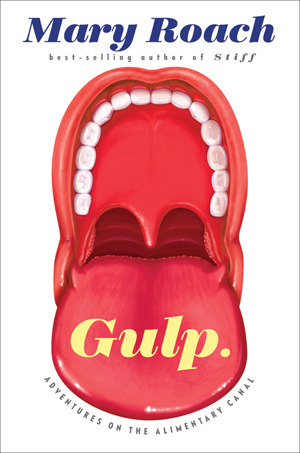
What I liked about Gulp: Adventures on the Alimentary Canal:
Author Mary Roach could allow the book to be fetid, but she is anal about reigning in on the crude humor without eliminating the riveting aspects of a journey down the alimentary canal. The book explores the gastrointestinal track from the mouth and mastication (chewing) through to the end product (ahem) exiting the rectum. At stops in between, the reader learns about the strength/weakness of hydrochloric acid, why beans produce gas, if mealy worms can really eat through a reptile's stomach and so much more. Introductions are made to scientists who study flatulence, stomach contents as well as accounts of past physicians like Pres. Garfield's very own Dr. Doctor who advocated rectum feeding. Gulp! Roach approaches an unappetizing subject with tasteful humor.
Why this book won't be for everyone:
The obvious. Not everyone will appreciate the subject matter or Roach's often corny humor or 300+ pages about what happens to a bolus.
My rating 4 stars
______________________________________________
 What I liked about A Constellation of Vital Phenomena:
Origin of title: "The Medical Dictionary of the Union of Soviet Physicians...
She flipped through the book and found answers to questions no sane person would ever ask. the definition of a foot, the average length of a femur. Nothing for insanity by grief, or insanity by loneliness, or insanity by reading reference books....Only one entry supplied an adequate definition, and she circled it with red ink, and referred to it nightly. Life: a constellation of vital phenomena-organization, irritability, movement, growth, reproduction, adaptation."
Culture and history: I found this book to be an excellent look at Chechen culture during the First and Second Wars with the Russian Federation. I appreciated the glimpse from the Chechen viewpoint since Chechens are usually looked at as "terrorists", or at best, the bad guys. Whether they do have a higher number of both amidst their population or not, one has to wonder how kindly we would feel towards our Mother Country if we had our villages destroyed, family members raped, maimed, killed and tortured in retaliation to our resistance for having relocated us and our families to Siberia in a previous era. Like with any slice of history, there will be two sides to a story and the truth normally lies somewhere in the middle. I choose to believe that with Chechen history. I doubt that the Soviets moved the Chechens to Siberia for no reason, but by the same token, did they really think a spirited group of people like that would trust them with their welfare in the future? Anyhow, I digress, especially since this book doesn't spend time debating this issue. What it does reveal is much pain, suffering and courage on the part of a couple of Chechen families in the village of Eldar and a physician, Sonja, her sister, and a couple of sisters that work at Hospital No. 6 where Sonja is the Administrator. With the meshing of their lives, the story of a young girl, Havaa, and their love for her emerges.
Why this book won't be for everyone:
1) The book flips back and forth throughout a timeline spanning between 1994 and 2004. Since much of what takes place occurs either at Hospital No. 6 or Dokka's home (in Eldar village) with the same cast of characters, it can be confusing even though the beginning of the chapter indicates the time period. I found myself referring back to the beginning of the chapter to refresh my memory as to the date of occurrence.
2) When I finished the story, I looked forward to reading the Author's Note anticipating that Anthony Marra must have a Chechen heritage or lived there for awhile since the picture of Chechen life was so vivid. Nothing was said to indicate that either was the case. Instead, I found that his writing was based on research.
My rating: 4 stars
_____________________________________________

The Contrasts.
The seemingly successful Burgess Boys of Shirley Falls, Maine leave their sister and quiet hometown at their first opportunity. Oldest brother, Jim, makes good - partner in a respectable law firm. Bob also adopts law as his profession, but as a Legal Aid attorney. Bob's twin, Susan, sticks to Shirley Falls, marrying, divorcing and raising a son, Zach, on her own.
The Coping Contrasts:
The family looks to Jim when Zach foolishly pulls an attention-getting stunt that gets plastered on national headlines for its racist implications. Jim reluctantly gets involved, but it is mild Bob who spends time with Zach to determine where the real problems lie. Susan falls apart.
The Contrasts in the Character's Conclusions:
No spoilers here. I will simply say that there are many layers not initially visible within each character. Secrets (such as which child should be taking responsibility for their father's death, if any), swirl beneath the surface to erupt at inopportune times. Things didn't end as I expected.
Why this book won't be for everyone:
This is a book about a dysfunctional family. It is not a happy book. Its not a book that most people will relax and actually enjoy. What it does do is raise important questions for the reader to contemplate.
My rating: 3 stars
____________________________________________
What I liked about Carrie and Me by Carol Burnette:
The candidness of this memoir by Carol Burnette about her eldest daughter, Carrie, pleased me. The reader watches Carrie grow from cute little tyke to drug-addicted teen to creative adult. I loved the warm friendship between mother and daughter indicated by printed copies of e-mails between the two. The depth of Carol's love for Carrie resonates in this short book. She even includes an unfinished cowboy romance novel that Carrie was working on when she died. Carol had promised Carrie she would see that her story was published.Why this book isn't for everyone:
There are large gaps in time. While I loved seeing how Carrie's book came together for her (through the e-mails to her mom), the entire memoir left me with more questions than answers regarding Carrie's life.
My rating: 3 stars
View all my reviews
________________________________________________
Publisher's Weekly Bestsellers List
USA Today's Bestsellers List
Guardian's List of All-time Bestselling Books in the UK
(I was surprised by the #1 book!)
How Stuff Works calculation of the bestselling books of all-time.
(Note: the books are listed by clicking on the gray boxed beneath the article. You can scroll over the boxes to get the titles.)
___________________________________________________
Steinbeck! Lots of it. I will post Part I of my reviews of his books published between 1932 and 1937.
Hey! Are you on Pinterest? Connect with me here.
LinkedIn? Connect with me here.
Wishing you a week of Happy Reading! See you next time.
Subscribe to:
Posts (Atom)